
Baptism
-
Is baptism necessary to go to heaven?
No, baptism does not wash away your sins or save you for heaven (I Pet 3:21). Only the death and blood of Jesus Christ can wash away your sins to make you acceptable to God. Jesus offered His blood to God Himself for all the sins of all His people (Heb 9:12-15; Eph 1:3-7). Jesus told the thief on the cross that he would be in heaven later that day, though he was never baptized.
For further study about baptism:
Catechism about baptism: Catechism.
All the Bible teaches about baptism: Baptism. -
What are the qualifications for baptism?
A person must believe that Jesus Christ is the Son of God and the gospel news that He is the only Savior from sin (Mark 16:15-16; Acts 8:37; 2:38). He must repudiate his sins and turn from them to live a holy life according to the terms of the Bible (Acts 17:30; 20:21; 26:20). His conscience must be convinced of the truth of the gospel so that he is free from guilt for sin and fear of condemnation (I Pet 3:21). Since baptism is the first act of obedience to Jesus Christ and living a new life for Him, a person must understand the nature and costs of true discipleship.
For further study about baptism:
Catechism about baptism: Catechism.
All the Bible teaches about baptism: Baptism. -
Why do some churches baptize babies?
Because around the 3rd century they began making the terrible mistake of assuming that baptism saves. Many babies died in infancy and early childhood in those days, and since original sin is a Bible doctrine, they had to baptize babies to comfort mothers that their dying babies were saved, so they started baptizing babies. Those who could not accept infant baptism, invented the age of accountability to get all their babies into heaven. Both infant baptism and an age of accountability are heresies – beliefs that are contrary to the Bible.
For further study about baptism:
Catechism about baptism: Catechism.
All the Bible teaches about baptism: Baptism.
Bible and Versions
-
How can I learn the Bible?
Start reading it today. We recommend a one-chapter-a-day reading program that will keep you out of the hard sections of the Bible but still take you from Genesis to Revelation in one year. We also provide a daily devotional to help you think about what you read in each of those chapters. After that, you should listen to sermons (there are over 1000 on this website), for God chose preaching to convey the Bible to your understanding (II Tim 4:2-4).
See Also
Bible Study Tools
One chapter a day Bible reading, daily devotionals, and other resources.
-
Did the Catholic Church give us the Bible?
This is a fascinating question, because the Catholic Church does not have a real Bible (they claim 73 books, though there are only 66), and they do not believe the Bible they do have! Catholics love to say their church gave the world the Bible from church councils in Rome (A.D. 382), Hippo (393), and Carthage (397). But there is a problem – the Bible shows that its books were identified as scripture around A.D. 70, about 320 years before the Catholics met about it. Peter while yet alive called Paul’s epistles scripture (II Pet 3:15-16), and Paul assumed Timothy had the New Testament to know how to be a New Testament minister (II Tim 3:16-17), and he even quoted Luke as authoritative scripture before A.D. 65 (I Tim 5:18; Luke 10:7).
See Also
For proof the Catholic Church does not believe the Bible: Is Catholicism Christian?
-
Which Bible version do you recommend?
We believe the King James Version is God’s word in the English language, with all the individual words God wants you to have. Since man is to live by every word of God, you need a Bible you can trust at the word level. We have a unique set of reasons for believing this. We do not care what others think of our position or skeptical questions they ask. Like Abraham, we are strong in faith and do not consider the faithless, foolish, and skeptical questions that trouble and worry those that do not believe or trust that God is able to perform His promises (Rom 4:19-21).
We believe the King James Version is God’s approved Bible version for several reasons. First, God promised to preserve His words, so by faith we look for them (Ps 12:6-7). Second, God promised His words would have fruit, so we look for a version that changed lives and nations (I Thess 2:13). Third, the internal integrity and facts of the King James are far superior to other versions, ancient and modern (John 10:35). Fourth, those who most resent the King James are those who think themselves wise, and God has promised to turn them into fools (I Cor 1:19-20.
See Also
Four categories of reasons defending the KJV: Proving the KJV.
For much more about the Bible and the KJV: Scripture. -
Is the King James Version inspired?
No, it is not inspired. Only the original writers of scripture e.g. Moses and Paul were actually inspired. But the inspired writings are providentially preserved (Ps 12:6-7; Is 30:8; I Pet 1:25), which means you may use the KJV as inspired scripture, as Luke commended the Bereans and Paul Timothy regarding their copies and/or translations (Acts 17:11; II Tim 3:15).
-
Ahaziah contradiction?
We are thankful you asked! God inspired the Ahaziah “contradiction” to help you know more than any scholar ancient or modern that questions or alters God’s words (Ps 119:98-100; I Cor 1:19). God hid much advanced revelation in this “contradiction,” which the pompous and proud textual critics and modern translators cannot see, just like they credit the wrong man for killing Goliath in II Samuel 21:19 of their modern Bible versions. If you love truth and appreciate exciting mysteries and discoveries, check out the link below to bless God for Ahaziah’s “contradiction”!
See Also
Full study of the confusion about Ahaziah’s age: Ahaziah Contradiction.
Charismatic Gifts
-
Has knowledge vanished away?
Yes, the Bible says the apostolic gift of knowledge would only last the forty years during the ministries of the apostles. There was no further benefit or need for such an incomplete and partial gift after the scriptures were completed (I Cor 13:8-10). The Pastoral Epistles of Paul make no mention of Timothy or Titus exercising any word of wisdom or knowledge – they were to study the Bible (I Tim 4:13-15; II Tim 2:15). The inspired scriptures have more knowledge than any gift of knowledge, if the man of God will study them as he should (II Tim 3:15-17).
Knowledge itself has not failed; there is more knowledge of spiritual things today from the Bible than ever existed by a word of knowledge at Corinth. Even average Christians that can read the Bible are able to know more than any gift of incomplete and partial gift of knowledge they had. In fact, though Corinth had such gifts while the apostles were alive, they failed the knowledge test by their carnality, false teachers, and weakness (I Cor 15:34; 8:7).
-
Has prophecy failed?
Yes, the Bible says the apostolic gift of prophecy would only last the forty years during the ministries of the apostles. There was no further benefit or need for such an incomplete and partial gift after the scriptures were completed (I Cor 13:8-10). The Pastoral Epistles of Paul make no mention of Timothy or Titus exercising any prophetic ability or gift – they were to study the Bible (I Tim 4:13-15; II Tim 2:15). The inspired scriptures are a more sure word of prophecy than hearing God’s voice from heaven in the presence of Jesus, Moses, and Elijah (II Pet 1:16-21). There is no prophet on earth that can fulfill the requirement for a prophet (Deut 18:22).
No prophecy of God has failed: all of God’s prophecies have been or will be fulfilled perfectly. But the childish apostolic gift of prophecy ended around 70 A.D. when the church entered into manhood with the finished scriptures able to make the man of God perfect without prophecy (I Cor 13:11; II Tim 3:16-17). Who would want to listen to a prophet when we have the Bible!
-
Have tongues ceased?
Yes, the Bible says the apostolic gift of tongues would only last the forty years during the ministries of the apostles. There was no further benefit or need for such a gift after the scriptures were completed (I Cor 13:8-10). The Pastoral Epistles of Paul contain no mention of them, and he instead emphasized what tongues-speaking churches like the least – plain Bible preaching (II Tim 4:1-4). There is no church on earth that even has real tongues being spoken, and none of the churches that think they are speaking in tongues obey Paul’s clear and simple rules for their use.
Detailed Bible evidence that tongues have ceased: Tongues Have Ceased.
Cults & Religions
-
Isn’t the Catholic Church the mother church?
Yes, you are right. The Catholic Church is the mother church. But the Bible sense in which she is the mother church is not very flattering. And what the Bible and history tell us about another line of churches is equally wonderful in a positive way.
Read the full answer -
Do you believe that tongues have ceased?
Yes, the Bible says the apostolic gift of tongues would only last the forty years during the ministries of the apostles. There was no further benefit or need for such a gift after the scriptures were completed (I Cor 13:8-10). The Pastoral Epistles of Paul contain no mention of them, and he instead emphasized what tongues-speaking churches like the least – plain Bible preaching (II Tim 4:1-4). There is no church on earth that we know of that even has real tongues being spoken, and none of the churches that think they are speaking in tongues obey Paul’s rules for their use.
See Also
Detailed Bible evidence: Tongues Have Ceased.
-
Why do you criticize James Dobson?
In the short space allowed for our answers, we cannot point out all his errors, but others have done so, and we have provided a link below. His adoration of self-esteem and self-love is clearly anti-Christian (II Tim 3:2; Rom 12:10). His teaching against the use of the rod is anti-Bible (Pr 23:13-14; 29:15). His compromise to placate Mormons, Catholics, and Methodists is unscriptural (Eph 5:11). His stories fit for a Girl Scout campfire are effeminate (I Cor 6:9). His assumption of the place of pastors and fathers is creepy (II Tim 3:6-7). Much more could be said.
See Also
Errors of James Dobson: General Teachings/Activities
More errors of James Dobson: Gospel of Self-Esteem & Psychology
-
Why do you criticize Roman Catholics?
Because their church is the greatest enemy of true Christianity identified in the Bible (Dan 7:1-28; II Thess 2:1-13; I Tim 4:1-3; Rev 17:1-6). While this is a shocking statement to most modern ears, nearly all evangelical Christians believed and understood it just a few generations ago. The popes of Rome and their manmade religion took Europe down into the Dark Ages for over 1200 years with unspeakable atrocities committed against Bible believers during that time. Nearly every belief and practice they hold is diametrically opposed to the word of God.
See Also
Evidence that Catholicism is not Christian: Is Catholicism Christian?
Evidence that Catholicism is Anti-Christ: Is Catholicism Antichrist?
More evidence that the pope is the antichrist: The Antichrist.
The blood of true saints: The Martyrs. -
Are the Popes the Antichrist?
Yes, if you mean Paul’s man of sin described in II Thess 2:1-10. If you want to understand Bible prophecy like Christians did until the middle of the 19th century, then study Daniel 7:1-28, where the little horn of Rome presented by Daniel is the popes of Rome. After adding Paul’s description already identified, the beast of Revelation 13 is clearly the pope, and the great whore of Revelation 17 is his church. All evangelical churches confessed this in their creeds until very recently. The Westminster Confession of 1647 of the Presbyterians stated it clearly in Chapter XXV about the church until it was revised in 1903. The Baptist London Confession of 1689 still states it in Chapter XXVI.
See Also
Evidence that Catholicism is not Christian: Is Catholicism Christian?
Evidence that Catholicism is Anti-Christ: Is Catholicism Antichrist?
More evidence that the pope is the antichrist: The Antichrist.
The blood of true saints: The Martyrs. -
Do you observe Lent?
No, we do not observe the pagan, Hindu, Catholic holy season of Lent. It only takes a little study of the Bible and history to know these practices are not Christian.
See Also
More about Lent and its relationship to Hinduism: Ash Wednesday.
-
Do you pray to Mary?
No, of course we do not pray to Mary. She cannot help anyone, including herself. Prayers are to be made only to God.
See Also
Bible evidence against Catholic concepts of Mary: Mariolatry.
Death and Afterlife
-
Is cremation okay for Christians?
No, it is not okay, for God created the body and saved it by the death of His Son. Desecrating the body by burning it in fire is the profane practice of pagan devil-worshippers with no knowledge of God (I Cor 6:13-20). Men in the Bible were buried, even at great cost and inconvenience, because their bodies sleep in the grave until the resurrection (Gen 23:1-20; 50:25-26; Deut 34:5-6; Matt 14:12; 27:57-60; Acts 7:60).
While God is easily able to put a body back together that has been cremated or destroyed accidentally or intentionally some other way, it is a sin against God and your body to treat it in such a disrespectful and pagan way. The wicked only will have their bodies burned in hell!
For much more about cremation and burial in the light of the Bible: Cremation.
-
Death?
The spirit leaves the body and returns to God (Eccl 3:21; 12:7). Without the spirit, the body rots and returns to dust rapidly (Gen 2:7; Jas 2:26). Paul said to be absent from his body was to be present with the Lord (II Cor 5:6-8). Jesus told the thief he would be with Him that day in Paradise – their two spirits would be in heaven in the presence of God (Luke 23:43,46).
See Also
Sermon and outline: Eternal Life is a Gift.
-
What happens after meeting God?
The spirits of God’s elect stay in the presence of God (Heb 12:22-24; Rev 6:9-11). They wait for the resurrection to get their bodies glorified to house their spirits for eternity (II Cor 5:1-4; I Thess 5:13-14; I Cor 15:35-54). The spirits of wicked men are cast into hell to wait for the final Day of Judgment when they will be consigned to the lake of fire (Luke 16:22-23; Rev 20:13).
See Also
Sermon and outline: Appointed to Death and Judgment.
Sermon and outline: The Book of Life.
Sermon and outline: Is There a Burning Hell?
Sermon outline: The Judgment Seat Of Christ. -
What happens at the resurrection?
Jesus Christ will call all bodies out of the ground to appear before God (John 5:28-29; Acts 24:15). The righteous will get glorified bodies for their spirits to spend eternity in the presence of God and Jesus Christ (I Cor 15:35-54; II Cor 5:1-4). The wicked will get their bodies restored to house their souls in the tormenting flames of the lake of fire (Rev 20:13-14; Matt 25:41,46).
See Also
Sermon and outline: Appointed to Death and Judgment.
Sermon and outline: The Book of Life.
Sermon and outline: Is There a Burning Hell?
Sermon outline: The Judgment Seat Of Christ. -
What happens at the Judgment?
All men will give an account of their lives to Jesus Christ (Rom 14:10-11; II Cor 5:10-11). They will be judged out of the books of God’s laws (Eccl 12:14; Rev 20:12). The wicked will be found guilty for their sins and cast into the lake of fire (Rev 20:11-15; 21:8; Matt 25:41,46). The godly will give an account but be saved by their names in the book of life (Rev 20:15; Luke 10:20).
See Also
Sermon and outline: Appointed to Death and Judgment.
Sermon and outline: The Book of Life.
Sermon and outline: Is There a Burning Hell?
Sermon outline: The Judgment Seat Of Christ. -
When babies die, do they go to heaven?
We believe elect babies go to heaven and non-elect babies go to hell. Elect babies go to heaven based on David’s testimony about his son and the glorious, gracious doctrines of election and representation (II Sam 12:23; Eph 1:3-6; Rom 5:12-19). We believe non-elect babies go to hell based on Adam’s sin on their behalf in the Garden of Eden (Rom 5:12-19). God loved Jacob and hated Esau before they were born and before they had done any good or evil (Rom 9:10-13).
We reject infant baptism as the way to save babies, since it is not taught in the Bible, and which was invented by Roman Catholics and copied by most Protestant denominations. We reject an age of accountability, since it is not taught in the Bible, and which was another invention to avoid the doctrine of representation or the doctrine of imputation of Adam’s sin (Rom 5:12-19).
See Also
Sermon and outline about imputation of Adam’s sin: The Two Adams.
God & Theology
-
Is the Trinity a Catholic invention?
No, it is not. You have heard the slander of the Jehovah’s Witnesses and other Unitarians that chose long ago to reject the Bible for their own opinions. All those who deny a plurality in the Godhead are condemned before they can finish the first chapter of Genesis, for the one God is a plural of divine Persons (Gen 1:26). At the other end of the Bible is John’s glorious testimony of three divine Persons being one God (I John 5:7). If you hear that I John 5:7 does not belong in the Bible, you are listening to an enemy and need the links below.
See Also
For a thorough defense of the authenticity of I John 5:7 … http://www.jesus-is-savior.com/Bible/1john57-exegesis.htm.
Holidays & Traditions
-
Is it wrong for a Christian to celebrate Christmas?
Yes, it is wrong. Christ’s mass is a Roman Catholic holy day that they adopted from the Roman Saturnalia feast and whitewashed with Christian ideas. The date is connected to the winter solstice, and the customs are from pagan religion, especially the evergreen tree. God has commanded His people to avoid any such customs or traditions of pagans (Deut 12:29-32; Jer 10:1-4; II Cor 6:14-18; Rev 18:4). The Bible evidence is that Jesus was born in the fall. There is no command or suggestion for Christians to observe the birth of Jesus. His death and resurrection are remembered at baptism by immersion and his death at the Lord’s Supper.
See Also
Reasons from the Bible and history: 120 Reasons Against Christmas.
Christmas celebrations as spiritual adultery: Christmas is Spiritual Adultery.
. -
Is it wrong to celebrate birthdays, anniversaries, and other such days?
No, such days have no religious connection or sinful purpose, so God does not care; they are matters of Christian liberty left up to each man’s conscience. Abraham threw a great feast when Isaac was weaned (Gen 21:8), and Job’s children had birthday parties (Job 1:4-5). It is Jehovah’s Witnesses that overreact in such matters, just like they overreact and condemn any and all oaths and swearing, which God’s people observed in both testaments. National holidays are acceptable for Christians, for Jesus attended a national holiday not taught in Moses’ law – the celebration of Hannukah or the cleansing of the temple by the Maccabees (John 10:22-23).
-
What do you think about baby dedications?
They are the invention of Baptists trying to get as close as they can to infant baptism without being heretics, but they are heresy. If two parents want to dedicate their child to the Lord in some capacity, then let them do it at home. Such a thing should not be brought into the church, for there is nothing in the Bible about it, others not convinced of its magical powers could be offended, and it could lead to further compromise and doctrine for that church. This like so many other inventions should be crushed and ridiculed by those who want to protect apostolic simplicity of worship and earnestly contend against every alteration to the religion of Jesus.
Israel & Jews
-
Is there any future for national Israel?
There is no good future for national Israel, because as the murderers of Jesus Christ and rabid rejecters of His gospel, they had the kingdom of God taken from them and given to believing Gentiles (Matt 21:33-46;22:1-7; Luke 16:16; John 4:20-24; Acts 13:42-52; 15:12-18; Heb 9:10). There is no prophecy in the Bible to be fulfilled that would restore this people or their nation. The events of 1948 and 1967 are of little significance politically and of no significance scripturally. Most Jews still live outside the Zionist nation of Israel. Bible prophecies used to promote a future conversion of Jews are future tense only to O.T. prophets, and the N.T. apostles declare them fulfilled (Acts 2:16-21; 15:12-19; Rom 11:25-29; Heb 8:6-13; 12:26-29).
See Also
Truth about Abraham and the Middle East: What About the Land?
For more truth about Abraham and land in the Middle East: Abraham’s Land.
Jewish populations of the world: Vital Statistics. -
When will Israel get all their land?
Israel got all the land God ever promised Abraham or Moses a long time ago (Josh 11:23; 21:43-45; Neh 9:7-8). It is a Jewish fable of C.I. Scofield that God must still give Israel land in the Middle East. The literal land was given conditionally, and Israel did not keep the conditions, so God scattered them throughout the nations. The spiritual land that Abraham sought was heaven (Heb 11:8-10,13-16), and he is in heaven right now, which is also called Abraham’s bosom (Luke 16:22-23). There is not a promise left in the Bible for earthly Jerusalem or Israel.
See Also
Truth about Abraham and the Middle East: What About the Land?
For more truth about Abraham and land in the Middle East: Abraham’s Land. -
But doesn’t God still owe the Jews all the land of Israel?
Only C.I. Scofield and his deluded followers believe that are Bible promises to Abraham yet to be fulfilled for his natural descendants in the Middle East. The Bible plainly states in dozens of places that all the promises to the fathers were fulfilled, especially the land promises (Josh 11:23; 21:43-45; 23:14-15; Neh 9:7-8; Jer 32:21-23). Though the land was promised to Abraham himself, he never possessed enough to put the sole of his foot on (Acts 7:5). He did not expect or want the land of Canaan, but rather heaven (Heb 11:8-10,13-16), which is called Abraham’s bosom appropriately enough (Luke 16:22).
See Also
Truth about Abraham and the Middle East: What About the Land?
For more truth about Abraham and land in the Middle East … Abraham’s Land. -
Should we pray for the peace of Jerusalem?
Yes, you should, but only the Jerusalem that God cares about. He does not care for the Jerusalem in the Middle East, because He rejected that city nearly 2000 years ago. While David wrote Psalm 122 regarding the stronghold of Zion that was the capital city of O.T. Israel, his words today can only be applied to the church and kingdom of Jesus Christ, for the only Jerusalem that matters is the one above (Gal 4:21-31; Heb 11:9-10; 12:22-24; 13:14; Rev 3:12;21:2). Jesus declared that earthly Jerusalem would be trodden down of Gentiles until this age ends (Luke 21:24).
See Also
True seed of Abraham and its consequences: Seed of Abraham.
Rebuilding of David’s kingdom with Gentiles … Dispensationalism’s Best Verse. -
Are most Jews actually Gentiles?
There is a controversy over this question and its answer. World Jewry is divided into basically two types – Ashkenazi Jews (80% of the total) and Sephardi and other Jews (20% of the total). There are a number of sources, including Jewish sources, that claim Ashkenazi Jews are actually descendants of the Khazars that converted wholesale to Judaism around 700 A.D. and settled in eastern Europe. Since the Bible term Ashkenaz is for a descendant of Japheth and a location close to the Khazarian kingdom, there is some Biblical basis for considering this possibility (Gen 10:3; I Chron 1:6; Jer 51:27). Regardless of this controversy, it is absolute truth that the true seed of Abraham in God’s view is Jesus Christ and those that are His (Gal 3:16,28-29; 6:16).
See Also
Sermon and outline of spiritual and biological Jews: The Israel of God.
For the Bible answer identifying the seed of Abraham: Seed of Abraham.
Article about Khazars and Ashkenazi Jews: BibleBelievers.org.au/jews.htm.
Jesus Christ
-
Who is Jesus Christ?
Jesus is the human Son of the creator God of the Bible – Jehovah. He was conceived about 2000 years ago in the womb of a virgin named Mary by God’s power. He fulfilled all the Bible prophecies about God’s special Savior to save His people from death and hell, so He is called the Messiah or Christ – the anointed one of God. Time is measured before and after His birth.
Because He was God with a human body, He had two natures – one divine and one human. He is the perfect Godman – able to know your temptations and troubles to help you, and yet also God able to relate to the Godhead. He died as a substitute sacrifice for His people, was buried, rose again, sits at God’s right hand ruling the universe, and He will come again soon to destroy the world and gather together those that love and obey Him to spend an eternity in heaven.
-
Wasn’t Jesus just a good man?
No, the historical record about Jesus written by several different writers in the Bible says much more about Him. He was God. He was sinlessly perfect, unlike any other man. He had full divine power to perform any miracle. He rose from the dead and ascended into heaven, where He rules the universe.
-
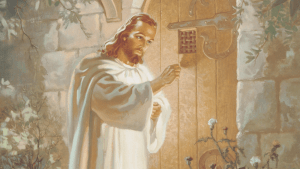
What does Jesus look like?
-
Why should I believe?
Because God has testified this fact about His Son, and He expects you to believe it (I John 5:9-13)? The Bible is the inspired record about Jesus Christ as the Son of God (John 20:30-31). This is the greatest fact in the universe – far greater than anything else you believe. Your response to this fact – either belief or rejection – determines God’s blessing on you in life and eternity.
-
Is Jesus Lord?
Jesus is Lord of all – period (Matt 28:18; Acts 10:36; Eph 1:20-22). He rules heaven and earth. All angels, good and bad, report to Him as His servants. They can do nothing without His approval.
Jesus is Savior of His people – for that is what His name means (Matt 1:21). He came to fulfill His Father’s will, which was to save every single one of God’s elect (John 6:38-39; 10:26-29).
Those Christians that think a decision for Jesus is what saves them have tried to separate the Lordship of Jesus Christ from His salvation. Some of them say you must confess and declare both. Others say you only must accept Him as your Saviour in order to be saved.
The problem with their whole foolish controversy is that no one is saved by their decision for Jesus. Salvation depends on God’s choice of them, which makes Jesus absolute Lord of each of life. If you want to assure your heart that you are God’s elect, then you must believe on Jesus as both Lord and Savior, because He is both of all God’s elect.
-
Eternal Sonship
Because Jesus Christ of Nazareth is the Godman that did not exist as such until His incarnation in the womb of the virgin (Luke 1:30-35). The central doctrine of the New Testament is that Jesus is the Son of God (Matt 16:13-18; Acts 8:37; I John 5:4-5). The question must be asked, when did Jesus Christ of Nazareth come into existence? We maintain that Jesus of Nazareth came into existence at His conception in Mary. While His divine nature, the Word of God, was eternal God, Jehovah Himself, His human nature had a very definite beginning in the fullness of time and was made by a woman (Gal 4:4).
The language and doctrine of Origen’s eternal generation of the Son of God are pagan and anti-Christian heresies. We have no use for them or any council such as Nicea or any church such as Rome or Baptists that adopt either. We totally reject Origen’s “begotten god” in John 1:18 (see the NASB) and his “a god” in John 1:1 (see the NWT). We believe Jesus Christ of Nazareth is the Son of God – fully God and fully man – but not eternally generated in any sense.
See Also
For more about the eternal sonship of Jesus and its refutation: Sonship of Christ.
-
Jesus descend to hell?
Did Jesus descend into hell and preach to the lost there?
No, this is a heresy of the Apostles’ Creed, which was first mentioned 300 years too late to have been seen or approved by any apostle. The fourth article says Jesus descended into hell, but Jesus Himself said to the thief that they would be in Paradise that day in the presence of God, for He also commended His spirit into God’s hands at the moment of death (Luke 23:43,46).
No, this is a heresy resulting from a bad interpretation of I Peter 3:18-20, which actually describes the Holy Spirit of the divine nature of Jesus Christ assisting Noah to preach to the disobedient men of his generation while the ark was being built under the longsuffering of God, the spirits of which men at the time Peter wrote his epistle were in the prison of hell.
Old Testament Superstition
-
What do you mean by Old Testament superstition?
We mean the foolish and heretical notion that there is residual value of any kind in Jewish ordinances from Moses and Mt. Sinai e.g. tabernacle furniture, the Sabbath, infant baptism, etc. Satan has mounted for nearly 2000 years a comprehensive campaign to dishonor Jesus Christ and redirect and distract Bible believers from the better covenant, ordinances, and promises of the New Testament. We stand rigorously opposed to any backsliding to Moses’ beggarly religion.
-
Why do you worship on Sun Day?
Many Sabbatarians who find our website and appreciate our bold Bible positions on many subjects ask why we do not keep the fourth commandment about the seventh day of the week. We appreciate the question, but there are very plain and powerful Bible answers that require us to worship Jesus Christ on the first day.
Read the full answer -
Why do you reject the Sabbath?
Because it was for the Jews only from Mt. Sinai to the resurrection of Jesus Christ. No one had heard of it before Moses came down from Mt. Sinai with the Ten Commandments (Moses wrote Genesis 2:1-3 in the context of Mt. Sinai about 2500 years after creation!). No true Christian kept the seventh day after the Lord’s resurrection, for the first day of the week had replaced the Jewish Sabbath, which Jesus had nailed to His cross and taken out of the way (Col 2:14-17; Acts 20:7; I Cor 16:1-2; Rev 1:10).
See Also
Short document against Sabbatarianism: What About the Seventh Day?
Sermon and outline against Sabbatarianism: Christian or Sabbatarian?
Pastors and Teachers
-
Full-time pastor?
Yes, of course, why should they not be paid for their labor, when you get paid for yours? The Levites and priests in the O.T. were compensated 120% of average income in Israel for their work in the tabernacle and temple. Great men like Hezekiah and Nehemiah encouraged them in their work by making sure they were paid (II Chron 31:4; Neh 13:10-14). Jesus Christ has ordained that gospel ministers or pastors are to be supported full-time and better if they are diligent and faithful (I Cor 9:6-14; Gal 6:6; I Tim 4:13-16; 5:17-18; II Tim 2:4). If a church does not follow this apostolic ordinance, they are disorderly and will reap the results of pitiful preaching (Pr 14:4; I Tim 4:13-16).
-
Didn’t Paul work?
Are you suggesting a contradiction in the Bible? Did Paul contradict what he taught about ministerial support in I Cor 9:6-14; Gal 6:6; I Tim 5:17-18? Consider five factors. First, Paul was inspired and did not have to study like ordinary men (II Tim 2:15). Second, Paul was supported by churches (Phil 4:15-18). Third, Paul did not have expenses of a wife and family, true of most pastors (I Tim 3:1-5). Fourth, Paul had the complete authority and right to demand compensation and living expenses (I Cor 9:1-12). Fifth, the reason he did not was one reason only – to be an example to a lazy church (II Thess 3:6-14) and a stingy church (I Cor 9:15-18). Therefore, the ordinance of Jesus still stands – pastors are supported full time (I Cor 9:1-14).
-
Who is the man of God in II Timothy 3:16-17?
Paul wrote those words to Timothy, the first bishop of the church at Ephesus (see the subscript for II Tim 4:22). Three books of the New Testament were written to pastors, so they are called the Pastoral Epistles, I and II Timothy and Titus. The specific context of the words is those called to preach the word (II Tim 4:2), Jesus Christ’s bishops-pastors-teachers, all synonyms. Are all in the church called to teach? No (I Cor 12:28-31)! God gave the Bible primarily to the men He chose and called to be teachers, no matter what testament you check (Deut 17:8-12; Ezra 7:6; Neh 8:1-8; Mal 2:7; Titus 1:5-9). Studying the Bible the way Jesus Christ ordained is a full-time job that cannot tolerate any distractions (I Tim 4:13-16; II Tim 2:4,15).
-
Do you have any suggestions for ministers?
Yes, we do. Please see the link immediately below that contains a variety of short essays with full scriptural support to help the man of God be all that he should be in serving His Lord and others in these perilous times of the last days.
See Also
Ministerial handbook with essays for ministerial perfection: Rules for Ministers.
Prophecy
-
Abomination of desolation?
What Matthew and Mark called the abomination of desolation from Daniel (Matt 24:15; Mark 13:14), Luke plainly explained were armies that would come to desolate Jerusalem (Luke 21:20). The Roman armies came during that generation and fulfilled the prophecy perfectly just as Jesus carefully explained (Matt 22:1-7; 24:32-35; Luke 19:41-44; Acts 2:40; I Thess 2:14-16).
See Also
More details: What is the “Abomination of Desolation”?
Detailed sermons and outlines: The Witness of 70 AD.
Salvation
-
Aren’t regeneration and conversion the same thing?
No, they are not. Confusing these two very different things has led to many heresies. Regeneration is God’s supernatural, omnipotent, instantaneous, creative work to give a rebel sinner a new nature that loves Him and wants to serve Him. Conversion is the lifelong educational process of a one of these regenerate persons coming to know God and the truth of the gospel for his comfort and knowledge and for how he should live in the world to please God.
For a short study of regeneration and conversion.
For a comparison of regeneration and conversion.
For the full truth about being born again. -
God so loved the world?
These words are from John 3:16, the most popular verse in the Bible. Most of those that use John 3:16 do not understand it. God only loves His elect that He chose in Jesus Christ before the world began to be His children (Eph 1:3-6; I John 3:1; Eph 5:25), because He cannot and will not love sinners outside Jesus Christ (Ps 5:5; 11:5; Matt 7:23). The word “world” is used with very wide latitude in the Bible; it does not mean every single person ever conceived since Adam. Compare “all the world” in Luke 2:1, where it means only the Roman Empire at that time.
See Also
Glorious truth of God’s love for His elect only: Distinguishing Love of God.
-
Lose salvation?
Not a single one of God’s elect can ever lose their salvation. God has guaranteed their final glorification in heaven according to His purpose for them (Rom 8:28-39). Jesus has promised to not lose a single one of them (John 6:39; 10:28-29; 17:2). Jesus will present every single one of them to His Father (Heb 2:13). They can prove their election sure by good works (II Pet 1:5-11).
Some verses in the Bible sound like a person can fall from grace (Gal 5:4), but that only means them falling from the proper doctrine of grace – they themselves are preserved in God to eternal life. Other verses in the Bible sound like presumptuous sins will take away eternal life, but the most severe of those passages – four of them in Hebrews – only refers to judgment on Israel.
See Also
For very detailed and thorough assurance of eternal life.
For the truth about once saved, always saved.
For the true interpretation of the Hebrews passages. -
What is limited atonement? Why “limit” God?
Jesus Christ died to atone for the sins of men to be saved. Because Jesus only died for those the Father gave Him to save – the elect – Calvinists generally say His death was a limited atonement for the elect only. God is not limited, but God did send Jesus Christ to die for the elect only. He limited the extent of Jesus’ death to them only. A better name for this doctrine might be definite atonement or particular redemption, meaning that Jesus’ death actually redeemed the elect.
Think carefully about the limits on Jesus’ death. Most Christians believe Jesus died for all the sins of all men, but men must fulfill certain conditions in order to be saved, so that Jesus’ death did not actually save anyone. They say He died for the sins of those in hell every bit as much as He died for the sins of those that make it to heaven. This severely limits Christ’s death, because it limits it from actually accomplishing anything. The truth in the paragraph above is that His death actually and fully saved every person for whom it was intended. The power and value of His death is not limited, only the extent to which God intended it – His elect chosen to be saved.
For Further Study
For many more glorious details about Limited Atonement: Limited Atonement.
For more about the distinguishing love of God for His elect: Distinguishing Love of God.
-
What is election and predestination?
Election is God’s choice of those that He would save (Eph 1:4; II Thess 2:13; II Tim 1:9), and He assigned them to Jesus Christ to be saved (John 6:39; 10:29). Jesus declared that He would not lose a single one of God’s elect – He would save every one of them (John 6:39; 17:2). This is called election in the Bible – God’s choice of rebel sinners that He would save (Rom 8:33; 11:7).
Predestination is God’s certain plan and purpose for all the elect to end up in heaven – their final destination. God’s predestination of the elect to heaven is so certain that Paul could write about their glorification in the past tense (Rom 8:28-30). God has adopted each of the elect to be His child and has promised each one an eternal inheritance – both events predestinated (Eph 1:5,11).
-
Isn’t election unfair?
Man chose death and hell over life and heaven in the Garden of Eden. Man has a depraved sin nature that will never choose God (Rom 3:9-18; 8:7-8). If God were to leave the choice up to man, not a single sinner would be saved (Ps 14:1-3). Therefore, God chose to save some rebel sinners against their will. How can anyone call this unfair? If God were fair, all men would go to hell. But since He is gracious – far better than fair – He has saved some against their depraved wills. Instead of complaining that God has not saved all men, why not praise Him for saving any of our rebellious race?
See Also
For much more about whether election is unfair or not: Is Election Fair?
-
What about “whosoever”?
This Bible pronoun means whoever or anyone at all. The much better question is, who will? The Bible teaches that no man will ever choose God on His own (Ps 14:1-3; Rom 3:9-18). If a person chooses to repent, believe on Jesus Christ, and live for Him, it is because God first regenerated that person and gave him spiritual life. So the best question is to ask whom God will do such things for, and the answer is each of His elect. The next best question is to ask how you can know if you are one of His elect, and the answer is to show the fruit of His elect (I Thess 1:2-4; II Pet 1:5-11).
-
If election is true, does it matter how we live?
Yes, for the only way to know you are God’s elect is to bear the fruit of a changed life (I Thess 1:2-4; II Pet 1:5-11). Election is God’s choice to save some men from sin, so continuing in sin shows the character of those not elected (John 8:47; I John 3:1-10). On Judgment Day, when election is revealed by the book of life, the evidence is doing God’s will (Matt 7:21-23; 25:31-46). To presume on election or mock it by living any way you wish proves damnation (Rom 3:8). If you grasp God’s electing grace, you will want to live for Him with all your might and passion.
-
If election is true, how are we responsible for our actions?
Paul did not like this question, because it implies that God is not fair, so he responded this way: “Nay but, O man, who art thou that repliest against God? Shall the thing formed say to him that formed it, Why hast thou made me thus? Hath not the potter power over the clay, of the same lump to make one vessel unto honour, and another unto dishonour?” (Rom 9:20-21).
All men are responsible for their sins, and they will pay the price for them in the torments of hell for eternity, unless God elected them to enjoy the free benefits of Jesus Christ’s death for them. Those elect that God has saved from their just death in hell can only know they are God’s elect and assure their hearts and minds by bringing forth much fruit in the way of good works (I Thess 1:2-4; II Pet 1:5-11).
See Also
More detailed considerations about election: What if Election is True?
-
If election is true, how can I be saved?
Election is true, because the Bible plainly teaches God’s choice of who will and will not be saved (Rom 8:28-39; 9:10-24). God knew that His elect would want assurance of His choice for their salvation, so He gave very specific evidence in the Bible (I Thess 1:2-4; II Pet 1:5-11; Matt 7:21). You can know you are saved by believing on Jesus Christ and living for Him (Acts 16:31).
-
Can Arminians go to heaven?
Yes, we believe Arminians can go to heaven, though they have fallen from the proper knowledge of grace and have received another Jesus, gospel, and spirit, for Paul did not doubt or condemn the eternal life of the Galatians or Corinthians though in such confusion or vulnerable to it (Gal 5:1-4; II Cor 11:1-4). We can commend the lives of many Arminians, for we see their good works done in love and faith to God and the Lord Jesus Christ, though their man-exalting and God-reducing soteriology is self-contradictory and near blasphemous.
See Also
Questions to ridicule Arminianism: A Few Questions for Arminians.
-
How can God forgive me?
Easily, because God is not like you. When you reflect on your sins, you think about forgiveness as you know it – how others have forgiven you, and how you have forgiven others. But God’s thoughts and ways are not like yours or mine. He forgives much faster and more fully than any person you know to a degree that is like how high the heavens are above the earth (Is 55:6-9).
Read the full answer -
Were men born again in the Old Testament?
Yes, without regeneration no man has a nature compatible with God or able to do anything pleasing to God. Without being born again, a man cannot see or enter the kingdom of heaven, or even hear with understanding the teaching of Jesus (John 3:3,5; 8:43,47). Prior to being quickened into life, every man is a willing follower of the world and the devil (Eph 2:1-3). Isaac was born again just like the Gentiles believers in the churches of Galatia (Gal 4:28-29).
Church Issues
-
My church is in error?
If you believe there is hope they might change, or if your conscience demands it of you, then you should carefully prepare your argument and present it privately to the pastor or board of elders (depending on the authority structure of the church). It is better if done in writing, for you have a record of what you said, they can take their time considering it, and it is less confrontational. You should be very respectful in your written approach, wise to pick the issue most likely to succeed, and be very concise in your argument. If the church is very large and has not shown any willingness to reconsider their doctrine or practice, then you should simply leave the church.
See Also
Sermon outline about Biblical separation: Biblical Separation.
Sermon outline about sinful compromise: God Hates Compromise.
Sermon outline about being on the Lord’s side: Who Is on the Lord’s Side? -
Leave a church in error?
No, because Paul’s warning about not forsaking the assembly was for churches holding to apostolic doctrine and truth (Heb 10:23-25). It is usually better to stay at home and do the best you can rather than participate in doctrine, worship, or practice that is contrary to the Bible. Paul taught that believers should withdraw from Christians in disorder (Rom 16:17-18; II Thess 3:6). If you do visit churches in your search to find a better one, you should never take communion, because it means you are in common union with that church.
More questions: FAQ: About Us · FAQ: Practical Life